.gitbay/wiki/Architecture/04-Trust-Boundaries.org
132 lines · 8430 bytes
Trust boundaries and data flows
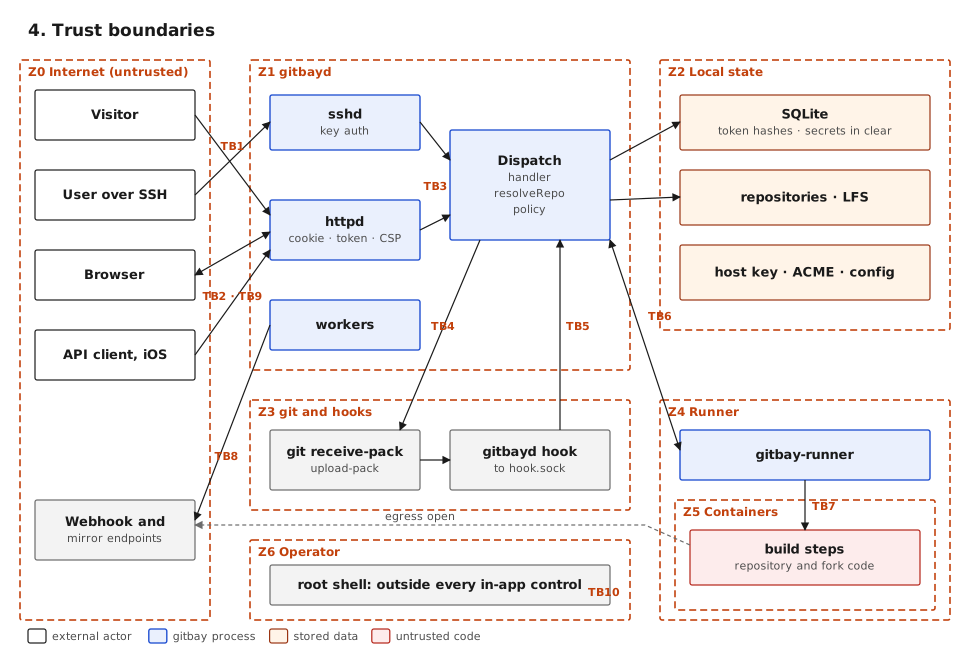
Zones
| Zone | Contents | Trust |
|---|---|---|
| Z0 | The internet: visitors, clients, webhook and mirror endpoints | none |
| Z1 | gitbayd process | holds all policy; trusted |
| Z2 | Local state: SQLite, repositories, LFS, keys, config | trusted; readable by the gitbay user |
| Z3 | git subprocesses and hook processes | run as gitbay on data from Z0; their decisions come from Z1 |
| Z4 | CI runner service | trusted to report honestly; holds secrets for trusted builds |
| Z5 | CI containers | untrusted code from repositories and forks |
| Z6 | Operator host access | root; outside every in-application control |
Boundaries
| ID | Boundary | What crosses | Control at the boundary |
|---|---|---|---|
| TB1 | Z0 → Z1 SSH | key auth, exec requests, git packs | public-key auth, per-IP failure limit (internal/sshd/sshd.go, ratelimit.go); unknown keys reach only register |
| TB2 | Z0 → Z1 HTTPS | page requests, form posts, API calls, fetches, LFS | TLS; session cookie or bearer token; checkOrigin on posts; CSP and security headers (internal/httpd/routes.go); smart HTTP is fetch-only (smart.go) |
| TB3 | identity → data | every command | Dispatch gates, then resolveRepo with policy predicates; unreadable repositories are indistinguishable from missing ones (5) |
| TB4 | Z1 → Z3 git | argv, repository path, stdin packs | argv built by code, never a shell; repository path from the database, not the request (internal/gitutil) |
| TB5 | Z3 → Z1 hook socket | ref updates, repository id, user id, key scope, commit objects | the daemon decides with policy.CheckPush and sig.VerifyCommit (internal/hookd/hookd.go). The socket trusts the ids in the request, so access to the socket is equivalent to acting as any user; it is reachable only through the gitbay user's filesystem |
| TB6 | Z4 ↔ Z1 runner channel | build claims (with secrets for trusted builds), logs, results | runner-scoped SSH key; claims limited to attached repositories; secrets only when the build is trusted (internal/control/build.go) |
| TB7 | Z5 → Z4 container | build steps, workspace, build home | rootless podman, operator-provisioned image, cgroup limits; the build home is shared per repository and the network is open (#255, #260) |
| TB8 | Z1 → Z0 outbound | webhooks, mirrors, mail, push | address checks on user-supplied URLs; HMAC on webhooks; no redirects (3) |
| TB9 | user content → browser | Markdown and Org bodies, READMEs, filenames | HTML sanitised (ugcHTML, internal/httpd/web.go, bluemonday); CSP script-src 'none' |
| TB10 | Z6 → everything | host shell | operator SSH on 2222, keys only, fail2ban; append-only offsite backup credentials |
Flows
Each flow lists its hops in order. Boundary IDs refer to the table above.
A. SSH control command
- Client opens SSH;
authenticatelooks up the key fingerprint and records user id, key id and scope in the connection (internal/sshd/sshd.go). TB1. - Each exec request:
runExecreloads the account, touches the key's last-used time, callsExec(sshd.go). Exectokenizes the command line (no shell) and routes git transport verbs torunGit, everything else tocontrol.DispatchwithSourceset to the key fingerprint (sshd.go).Dispatchgates and runs the handler; mutating successes are audited (internal/control/control.go). TB3.
B. git push over SSH
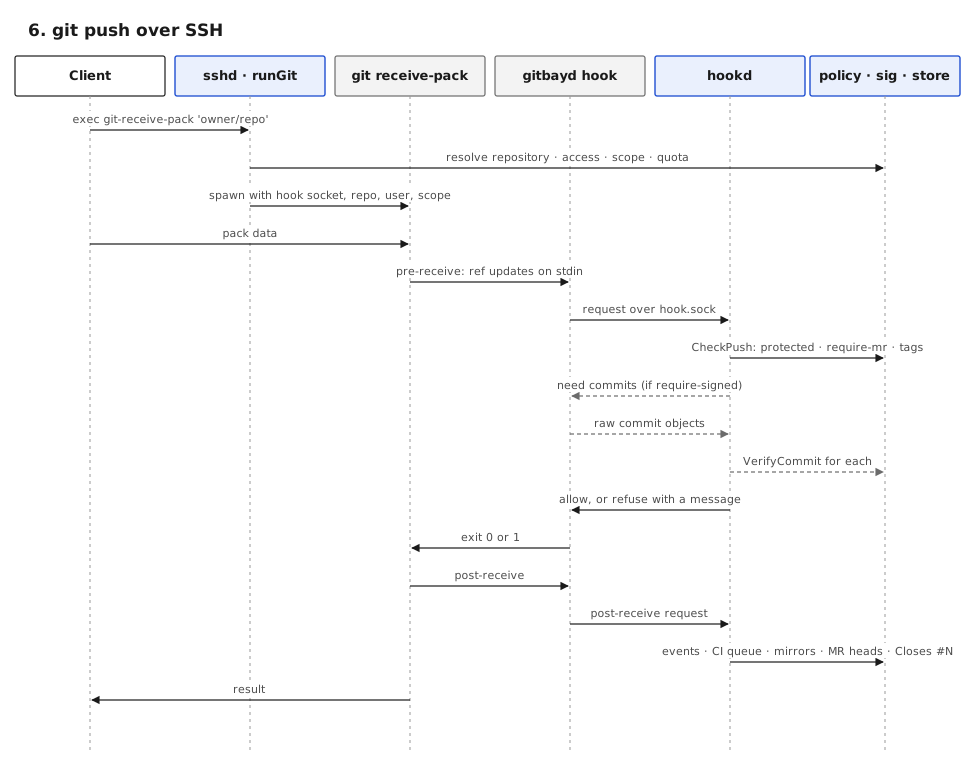
runGitresolves the repository, applies the deploy-key or account checks, archive and pull-mirror refusals and the owner's storage quota (sshd.go). TB3.git receive-packruns with the hook socket path, repository id, user id and key scope in its environment (sshd.go). TB4.- git runs
pre-receive, which isgitbayd hook pre-receive. It reads the ref updates, computes ancestry in git's quarantine environment and asks the daemon over the socket (cmd/gitbayd/hook.go). TB5. - The daemon applies
policy.CheckPush(protected branches,require-mr, protected tags, server-ownedrefs/merge-requests/*) and, when the repository requires signed commits, asks for every incoming commit object and verifies each (internal/hookd/hookd.go). - On refusal the hook exits 1 and git rejects the push atomically.
- On success git runs
post-receive; the daemon records events, marks mirrors dirty, queues CI, syncs merge request heads, processesCloses #Nreferences and audits force pushes (hookd.go).
The server's own merge of a merge request does not pass through the
hooks: runMRMerge updates the ref with a compare-and-swap
(internal/control/mr.go) after MergeGates
(mr.go). When signed commits are required only fast-forward
merges are allowed, so the server never writes an unsigned commit
(mr.go).
C. Fetch over smart HTTP
GET info/refs and POST git-upload-pack serve public repositories
only; a private repository answers 404. git-receive-pack over HTTP
always answers a pkt-line refusal, so there is no password prompt and
no HTTP write path (internal/httpd/smart.go,
routes.go). TB2.
D. Web read and write
- The session cookie is hashed and looked up (
accounts.go). - Pages dispatch read commands into the registry with
Source=weband decode the JSON result into the template (internal/httpd/control.go). - Form posts pass
checkOrigin(accounts.go), dispatch the matching command, and map the exit code to a redirect or an error on the page. Three toggles (pin, watch, mark read) write the store directly instead (#261).
E. JSON API
apiAuthhashes the bearer token and looks it up; any failure is a uniform 401 (internal/httpd/api.go).- Per-account rate limit, with writes at a tenth of the read budget.
POST /api/v1/cmddispatches any command except git transport;GET /api/v1/readrefuses anything not markedReadOnly, so a GET cannot write (apiread.go).- Exit codes map to HTTP status: 0→200, 2→400, 3→404, 4→403, else 500.
F. LFS
git-lfs-authenticate over SSH applies the same repository checks as
git transport and returns a one-hour HMAC token scoped to repository
and operation (internal/sshd/lfs.go, internal/lfs/lfs.go). The
HTTP batch, upload and download endpoints verify that token; public
repositories allow anonymous download. Objects are verified against
their SHA-256 id on upload.
G. Browser login by emailed link
/logintakes a username or email; per-IP and per-account limits (5 per hour) apply, and every non-eligible case returns the same response (internal/control/loginlink.go).- A 32-byte token is mailed; only its hash is stored, valid 15 minutes.
/login?token=consumes it atomically, rechecks the account and sets the session cookie (accounts.go).
ssh git@host web login mints the same kind of link, valid 5 minutes,
to an already-authenticated key (internal/control/web.go).